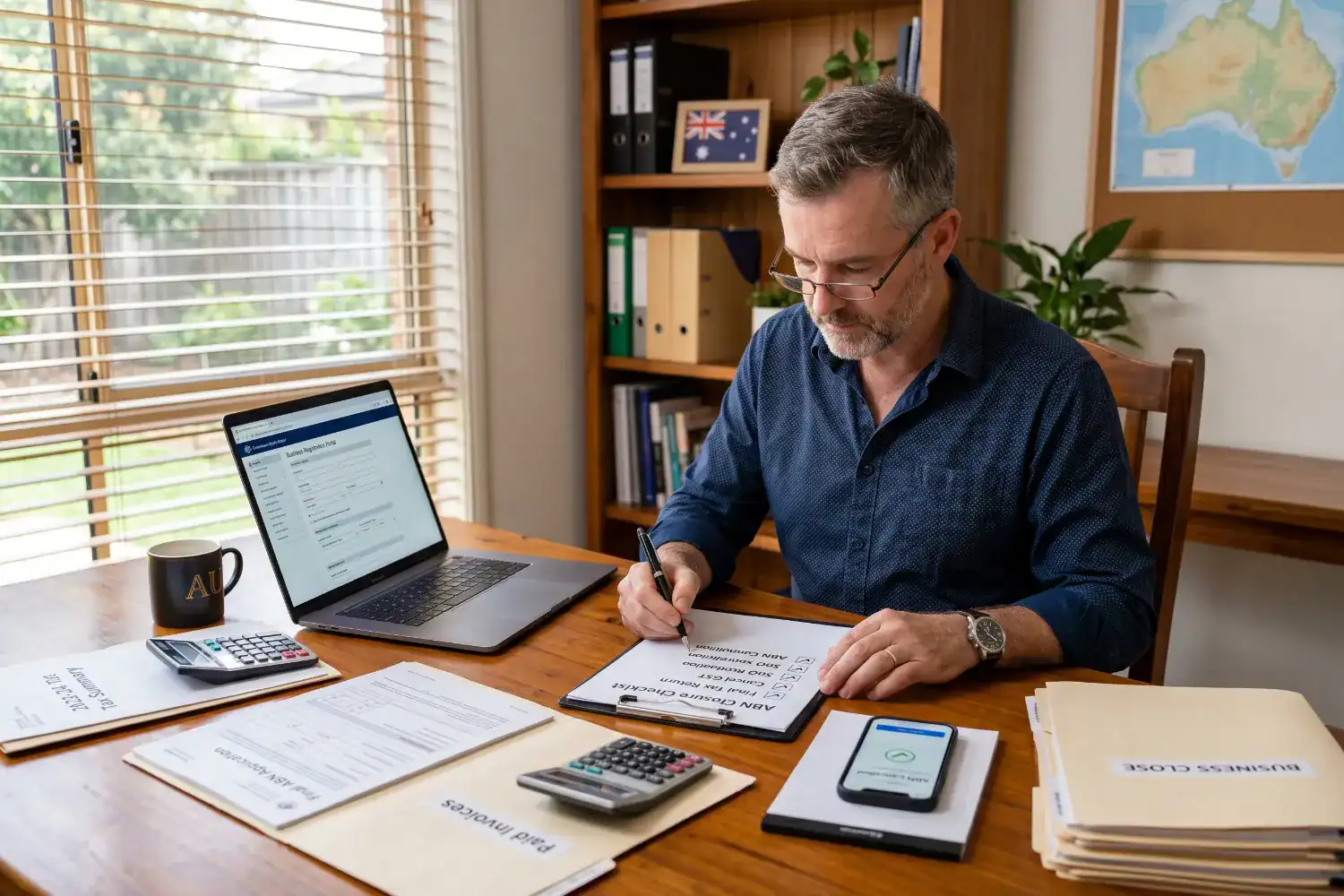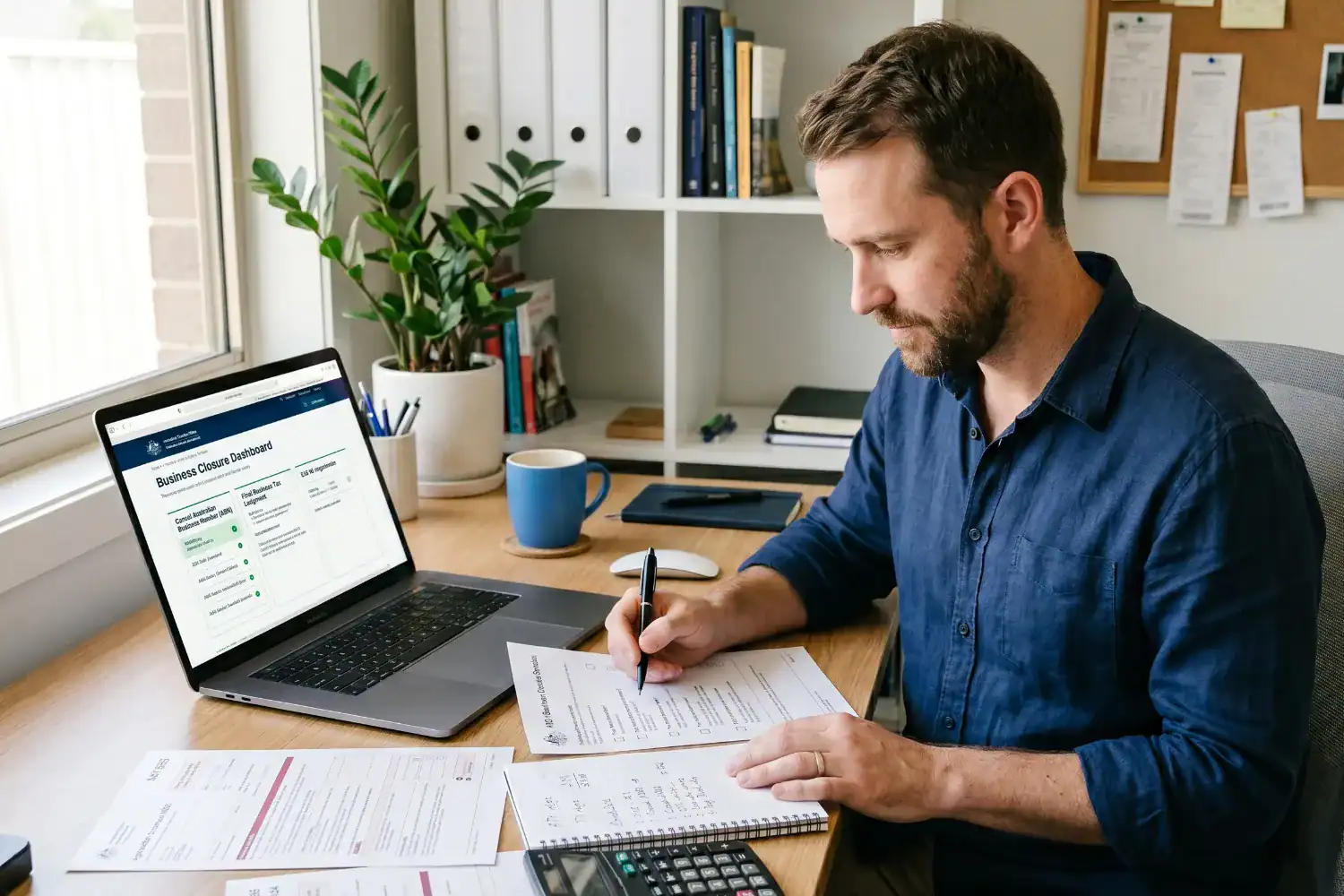
Closing your business as a sole trader in Australia isn’t as simple as just stopping work and walking away. You’ve got registrations to cancel, debts to settle, and final tax obligations to sort with the Australian Taxation Office.
The comforting part is that the process is way simpler than shutting down a company. But you still need to follow specific legal steps to avoid penalties that could bite you months later.
This guide on how to close a sole trader business in Australia covers everything from financial obligations to record-keeping requirements when closing a business for good. Let’s get started.
What Does Closing a Sole Trader Business Actually Mean?

Closing a sole trader business means you’re permanently stopping all business activities and officially cancelling your Australian Business Number (ABN) with the authorities.
That means you’re no longer trading under that business structure, and you need to notify the ATO and other relevant authorities straight away.
The moment you cease trading, you can’t use your business name to invoice customers or claim expenses anymore. To be more specific, closing a business starts the day you stop all commercial activity.
Unlike a Pty Ltd company, sole traders don’t need ASIC involvement since the business structure is tied to you personally. When your business closes, you and the business are legally the same entity. So everything from debts to assets stays attached to your name.
Financial Obligations You Need to Settle First
You need to settle all debts, meet payment obligations, andcomplete your final tax return before you can properly close your sole trader business.
Here’s what needs to be ticked off your financial obligations list:
| Financial Obligation | What You Need to Do | Timeline |
| Outstanding debts | Pay suppliers, contractors, and business expenses | Before ABN cancellation |
| Final tax return | Declare all business income and claim deductions | Up to the closure date |
| Money owed to you | Collect payments or write off bad debts | Before finalising accounts |
| Lease agreements | Settle property, equipment, and vehicle leases | Check contract terms |
Start by paying off all your supplier invoices and contractor fees. Depending on your situation, you may also need to consider capital gains tax on business assets you’re selling as part of closing your business. Outstanding debts can complicate your ABN cancellation, so sort these first.
Once debts are cleared, lodge your final tax return covering everything up to your business closure date. Make sure you’re declaring all income and claiming every legitimate deduction you’re entitled to for tax purposes.
Don’t forget about the money customers still owe you. Chase those payments or formally write them off in your accounts so the ATO doesn’t question missing income later.
What we’ve seen is that small business owners often overlook lease agreements, and that mistake can trigger legal obligations months after you’ve stopped trading. So don’t be that person unless you want angry landlords and equipment companies chasing you next year.
How to Cancel Your ABN (Australian Business Number): The Step-by-Step Process
Cancelling your ABN takes about 10 minutes online, but if you get the timing wrong, you’ll trigger compliance issues that haunt you for months.
Start by accessing the Australian Business Register online using Digital ID and RAM, or work with your registered tax agent to start the cancellation. The whole process happens through the ABR portal, and you’ll need your myGovID set up beforehand.
You’ll need to specify the date your business stopped trading and confirm you’ve met all outstanding tax and super obligations. This closing date is important because it determines your final reporting period. If you get it wrong, you’ll be chasing corrections with the ATO for weeks.
Remember, the cancellation takes effect on the date you provide, not on the date you submit the form. So accuracy really counts here.
If you cancel your number with a backdated closing date, you could miss business registrations that should’ve been active during that gap. And finally, double-check everything before hitting submit.
Closing Tax Registrations and Other Accounts

Your ABN cancellation doesn’t automatically close every registration or other business registrations you might have. You need to manually check and cancel GST, super accounts, and PAYG withholding separately.
Below, we’ve explained how to properly close each tax registration without triggering compliance issues:
Deregister Your GST If You’re Registered
If you were registered for GST, you must lodge a final business activity statement covering your last trading period. The Australian Taxation Office won’t let you deregister until this final BAS is submitted and processed.
Deregistration happens automatically when you cancel your ABN, but you can also handle it separately through the Business Registration Service. This separate option gives you more control over timing when you’re winding down operations gradually.
That means any GST credits or amounts owing need to be settled before deregistration to avoid ATO follow-ups later on. Keep in mind that outstanding tax obligations from your GST registration can trigger penalty interest that keeps growing even after you’ve stopped trading.
Close Your Business Super Account Properly
Making super contributions for yourself? You can keep the account open or roll it into a personal fund. Most sole traders choose to keep their super where it is since there’s no requirement to close it.
For record updates, notify your super fund that you’re no longer operating as a business and avoid unnecessary fees. Because some funds charge different fees for business accounts versus personal accounts.
What’s more, if you have employees, you need to ensure all final super guarantee payments are made before closing any employer clearing house accounts. Since missed payments can trigger serious penalties.
Cancel PAYG Withholding If You Had Employees
You must cancel PAYG withholding before cancelling your ABN. The system won’t let you complete your ABN cancellation while PAYG withholding is still active.
So we recommend submitting final payment summaries for all workers and lodging your last PAYG withholding report with the ATO before cancelling this registration. Your PAYG withholding obligations don’t end until this paperwork is properly filed.
From there, contact the ATO directly or use your tax agent to ensure PAYG withholding is properly closed before proceeding with ABN cancellation. Also, fringe benefits tax registration needs separate cancellation if you were registered for FBT during operations. Meeting these tax requirements ensures you avoid penalties when closing your business.
What Happens to Your Business Records When a Business Closes?
You can’t just toss those old invoices once your ABN is cancelled. The ATO still has five years to come knocking for them.
So, you must keep business records for five years after you close, including invoices, receipts, tax returns, and bank statements. However, the five-year clock starts five years from the date you lodge your tax return for the period the record relates to
The Australian Taxation Office can request these records during audits or compliance checks, even after your business closes. They also have the legal right to review your past records to verify you met all tax and super obligations properly.
The fact here is that digital storage is perfectly acceptable and often easier to manage than physical files. Just make sure backups are secure and accessible whenever the ATO comes calling.
From our experience working with retailers in Melbourne, cloud storage beats cardboard boxes every time when you need to find a specific invoice from three years ago. Employee records also need to be kept for the full five-year period, covering everything from pay slips to super contributions.
Sole Trader vs Pty Ltd Company: Key Differences In Business Structure
The closing process for sole traders is simpler and cheaper than shutting down a Pty Ltd company, but the personal liability risk is far higher.
When closing, the two structures differ in several ways:
| Aspect | Sole Trader | Pty Ltd Company |
| Closing Method | Cancel ABN via Business Registration Service | Apply for voluntary deregistration through ASIC |
| Who Handles It | You handle it yourself or via a tax agent | Directors or liquidators for insolvent companies |
| Personal Liability | You’re personally liable for all debts | Limited liability protection (corporate veil) |
| Asset Distribution | Business assets are your personal assets | Company assets distributed via members’ voluntary liquidation |
Sole traders cancel their ABN through the Australian Business Register, while Pty Ltd companies must apply for deregistration through the Australian Securities and Investments Commission. The cost difference is a vital factor here because companies often need professional liquidators to handle the process.
Company directors face more complex requirements, including finalising annual returns and notifying shareholders about the closure. What’s more, they might need to appoint a liquidator when the solvent company has surplus funds to distribute. A members’ voluntary liquidation lets directors distribute company assets properly to shareholders while meeting all legal obligations.
Above all, they carry personal liability for debts. Creditors can pursue personal assets even after the business closes officially. There’s no corporate veil protecting your house, car, or savings from business debts. That’s why many individual operators eventually restructure as a Pty Ltd company once their business assets and revenue grow substantially.
Understanding Debt Problems and Insolvent Trading When You Can’t Pay

The first you need to understand is that sole trader debts are your personal debts, unlike company debts, which belong to the business entity.
Let’s break down what happens when you’re struggling with debt:
What Happens If You’re Trading While Unable to Pay Company Debts
Continuing to operate while unable to pay debts as they fall due creates personal liability since you and the business are the same entity. Unlike company directors who face insolvent trading penalties under corporate law, sole traders deal with personal bankruptcy risk when debts become unmanageable.
The Australian Financial Security Authority handles bankruptcy cases for individuals, including individual operators who can’t meet all their debts. This is completely different from how insolvent companies are managed through formal liquidation processes.
When you suspect you can’t pay creditors, stop trading immediately and seek advice to avoid making your financial situation worse. Continuing while insolvent leads to serious consequences like bankruptcy that wreck your credit rating for years.
How Business Debts Work as a Sole Trader
All business debts are your personal debts, meaning creditors can claim against your house, car, savings, or other personal assets. There’s no legal separation between you and your business when financial difficulty hits.
In a Pty Ltd company, company debts belong to the company entity, offering directors limited liability protection in most circumstances. The corporate structure creates a shield that sole traders can’t access.
This lack of separation makes closing an insolvent sole trader business far riskier than closing a company. Personal guarantees on business loans also remain your responsibility even after you cancel your ABN and stop trading completely.
When to Seek Professional Advice Urgently
Contact an accountant or business adviser immediately when you’re closing due to debt problems or potential insolvency situations. Professional advice helps you understand your obligations, negotiate with creditors, and potentially explore debt agreements or bankruptcy alternatives if needed.
On top of that, legal advice becomes necessary when creditors are threatening court action or if you’re unsure about your personal liability exposure. A creditors’ voluntary liquidation might be an option if you’re operating as a company rather than a sole trader.
The earlier you get help, the more options you’ll have to manage the financial situation without destroying your personal finances. Don’t wait until bailiffs are knocking on your door to start looking for a business adviser who specialises in financial difficulty cases.
When Should You Close Your Sole Trader Business?
You should close your sole trader business when it’s consistently losing money, you can’t meet debt obligations, or personal circumstances make continuing impossible.
Here are the reasons for closing a business that small business owners face most often:
- Consistent losses with no path to profitability
- Health issues or major life changes
- Market demand has completely disappeared
- Ready to retire or change careers
- Debt levels are becoming impossible to manage
Your business hitting one or two rough months doesn’t mean you should shut down immediately. But when you’re consistently losing money with no realistic turnaround plan, staying open just digs a deeper financial hole.
The same goes for personal circumstances like mental health struggles or family commitments that make running the business unsustainable long-term. Sometimes your well-being comes before business survival.
The harsh reality is that market shifts happen quickly. When key clients leave, and your services no longer have demand, hoping things will bounce back rarely works. What’s equally tough is recognising when continuing to trade would worsen your financial position rather than improve it.
Before debts spiral out of control, closing while still financially viable gives you options that disappear once insolvency hits.
Can You Reopen a Closed Business Later?
You can absolutely restart as a sole trader after closing, but you’ll need a new ABN, and your old debts will still follow you.
Yes, you can apply for a new ABN and restart as a sole trader whenever you choose to resume operations. The application process through the Australian Business Register is exactly the same as when you first started. You’ll be back up and running within a day or two once approved.
Your previous business name might still be available, or you can register a new one through ASIC’s business name registration service. Remember to check availability before you cancel your ABN if you’re planning to restart later with the same name.
However, any debts from your previous business remain your personal responsibility and won’t disappear just because you’ve cancelled the ABN. Creditors can still chase you for outstanding amounts even years after you’ve stopped trading.
Common Small Business Mistakes When Closing

Now that you know the proper steps, let’s cover the mistakes that trip up most sole traders during the closing process.
- Forgetting final tax lodgements: Forgetting to lodge the final tax return or BAS triggers penalties and interest charges from the ATO months later. Many business owners wrongly assume their obligations end the day they stop trading.
- Not keeping business records: Tossing those invoices feels freeing until an audit letter arrives three years later. Not keeping business records for the required five-year period risks serious compliance issues when the ATO requests documentation during audits.
- Assuming ABN cancellation closes everything: Your ABN and GST registration cancellation doesn’t automatically close business insurance policies, liability insurance, or business bank accounts. These all need separate closure, and assuming otherwise leaves you paying fees for services you’re no longer using.
- Forgetting to notify stakeholders and settle final obligations: Failing to notify clients, suppliers, and service providers creates confusion and payment disputes later. Outstanding wages, owed entitlements, lease agreements, and the payment summary annual report all need handling, plus you must send written notice to everyone affected at least two weeks before your business closes.
Don’t let these common slip-ups turn your clean exit into a messy legal headache.
Time to Close the Chapter? Here’s What’s Next
A methodical approach to closing your sole trader business protects your personal finances and keeps the ATO off your back for good. Start by listing all your financial obligations, tax registrations, and outstanding debts. Work through each step methodically, keeping records of all cancellations and final payments for compliance.
If you’re stuck on any part of the process, speaking with a registered tax professional or business adviser will save you headaches later. Without asking experts early, you’ll likely make financial decisions that turn simple closures into complicated messes.
We’d love to hear from you if you have questions about your specific situation.