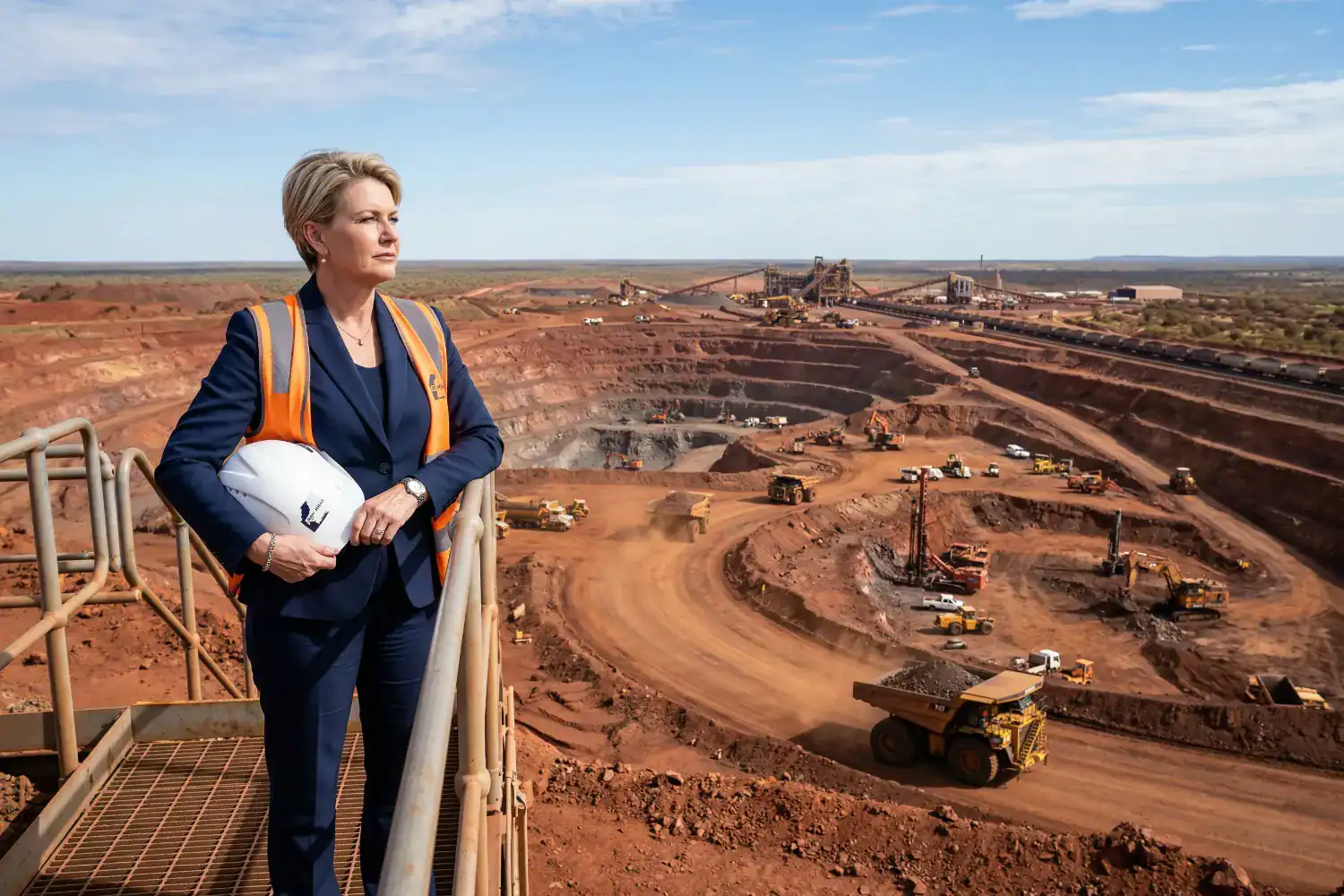
Gina Rinehart is Australia’s richest woman and one of the most prominent figures in the country’s mining industry. But she didn’t start there. In fact, Gina Rinehart didn’t even inherit a profitable business.
She took over Hancock Prospecting in 1992 with significant debt after her father’s death. And over the next two decades, she rebuilt it into one of the most successful private mining companies in the country. Her story shows what’s possible when you refuse to sell under pressure and bet everything on long-term strategy instead of quick exits.
So, in this article, we’ll cover:
- Her current net worth and how it’s calculated
- The mining projects that generate her wealth
- Controversies and awards that defined her career
- And how she compares to other Australian and global billionaires
Let’s find out she converted a struggling company into today’s prosperity.
What Is Gina Rinehart’s Net Worth?
Gina Rinehart’s net worth sits between $25-30 billion AUD, which makes her one of Australia’s wealthiest individuals and the richest woman in the country. That fortune is built almost entirely on iron ore, with valuations that swing wildly based on global commodity markets.
Take a look at where those numbers come from.
Net Worth Estimates
Our conversations with Perth-based mining analysts point to Forbes as the most reliable source for tracking her wealth. They estimate it at around $25-30 billion AUD, though the number changes constantly with iron ore prices.
Global demand for iron ore directly impacts her net worth, too. Like when Chinese steel production ramps up, her valuations climb, and when it slows, they drop just as quickly.
Despite the ups and downs, her fortune ranks among Australia’s top three wealthiest individuals and is driven almost entirely by mining operations in Western Australia.
How Net Worth Is Calculated
Now, you may wonder: what’s behind those numbers? Hancock Prospecting Pty Limited is privately owned, so valuations rely on revenue estimates, asset ownership stakes, and comparable industry benchmarks.
Her wealth also includes direct ownership of iron ore mines, royalty agreements with other producers, and equity in joint venture company operations. Beyond that, dividend payments from profitable operations, retained company earnings, and land holdings all feed into total asset calculations.
Who Is Gina Rinehart?

Gina Rinehart is an Australian mining magnate who controls Hancock Prospecting, the private company behind some of Western Australia’s largest iron ore operations. She’s one of the most polarising figures in Australian business.
And here’s how she got there.
Early Life and Education
Born in Perth in 1954, she grew up surrounded by Western Australia’s booming iron ore industry and exploration culture. Her childhood included frequent visits to remote Pilbara mining sites, where her father conducted geological surveys and prospecting work.
She studied economics at university before joining the family business, and gained early exposure to resource valuation and commercial operations. That premature grounding in Australia’s history of mining expansion would later prove extremely valuable.
Relationship With Lang Hancock
Gina’s father, Lang Hancock, laid the groundwork for what would become one of Australia’s most valuable private fortunes. He discovered massive iron ore deposits in the Pilbara in 1952, which forever changed Australia’s mining landscape.
However, instead of owning mines directly, he built a private family company through royalty agreements. That model avoided the capital risks of direct mine ownership and operation. His business focused on securing exploration rights and negotiating long-term income streams with major mining companies operating in the region.
Takeover of Hancock Prospecting
Taking over a family business sounds straightforward until you inherit $20 million in debt and a mountain of legal disputes. Gina inherited control of Hancock Prospecting in 1992 following her father’s death, accompanied by immediate financial and legal pressures.
The company carried substantial debt, had strained relationships with joint venture partners, and unresolved family disputes over estate distribution. Additionally, legal fees from the estate battle with her stepmother, Rose Porteous, added to the financial pressure. All while creditors circled waiting for payments on outstanding loans.
Regardless of the hardship, she restructured operations, renegotiated agreements, and pursued aggressive expansion. Her efforts as an Australian female entrepreneur had stabilised Hancock Prospecting and restored profitability over the next decade.
How Did Gina Rinehart Build Her Wealth?
Gina Rinehart built her wealth by restructuring a debt-laden mining company, expanding iron ore operations, and betting big on infrastructure projects during commodity boom cycles. And this journey took decades, so let’s look at how it happened.
Early Financial Struggles
Hancock Prospecting owed millions when Gina took over, with creditors pressuring for repayment amid falling commodity prices (debt has a way of focusing priorities). On top of that, legal battles with family members and former business associates drained important resources, which created additional financial strain during the transition period.
Despite all that pressure, she retained ownership of valuable Pilbara tenements even when receiving offers to sell. The reason? She was betting on future iron ore price recovery. And that gamble paid off when commodity markets turned around.
Expansion Strategy
Once the debt was under control, scaling operations became the priority. It’s, in fact, a common pattern from our coverage of Australian entrepreneurs: clear debt first, then expand aggressively.
She prioritised scaling iron ore production through strategic partnerships with Rio Tinto and other major operators in Western Australia. And thankfully, those partnerships proved valuable. Long-term supply contracts with Chinese steel mills provided stable revenue and enabled further investment in greenfield projects and infrastructure across major iron ore mines.
At the same time, her approach focused on maximising royalty income while gradually transitioning to direct mine ownership and operational control where feasible.
Project Development Approach
Building a mine is expensive. And developing the rail and port infrastructure to move the iron ore costs even more. Because of that, she had to invest billions in rail, port, and processing infrastructure to unlock previously inaccessible iron ore reserves in remote locations.
Raising money for projects like Roy Hill even required securing financing from international banks and export credit agencies.
Beyond that, greenfield land-based mining developments and infrastructure projects required high-risk capital expenditure. This is something that traditional mining companies typically avoided. But her willingness to commit personal wealth and company assets showed she had real skin in the game.
What Are the Main Sources of Gina Rinehart’s Wealth?

Gina Rinehart’s wealth comes from mining royalties, company dividends, joint venture income, and direct ownership of iron ore operations across Western Australia. Each of these revenue streams works differently, but they all depend on iron ore demand.
Look at this breakdown of the source of her wealth:
- Mining Royalties: She earns royalties whenever iron ore is extracted from land her company controls. Projects like Roy Hill iron ore generate royalty payments based on production volume and commodity prices. These payments arrive regardless of who operates the mine, and create passive income that scales with global demand.
- Company Dividends: Hancock Prospecting operates as a successful private company that distributes profits directly to her as the primary shareholder. Unlike publicly traded miners, there’s no obligation to publish dividend amounts. Though industry analysts estimate dividends in the hundreds of millions annually.
- Joint Venture Income: She holds equity stakes in joint venture company operations like Hope Downs. This model reduces operational risk while maintaining exposure to iron ore price movements. Joint ventures also provide access to infrastructure like rail and port facilities without bearing full construction costs.
- Iron Ore Operations: Direct ownership of iron ore mines in Western Australia, particularly Roy Hill, generates the largest share of her wealth. These operations require massive capital investment but deliver enormous cash flow once production ramps up.
When combined, these four income streams create a diversified revenue base that’s still heavily tied to iron ore prices. And when commodity markets boom, all four sources surge simultaneously.
What Is Hancock Prospecting?
Hancock Prospecting is one of Australia’s largest private companies, which operates iron ore mines, earns mining royalties, and manages extensive agricultural holdings across the country. It’s been family-controlled by the Hancocks since its founding.
Let’s find out what the company does.
Core Business Operations
From what we’ve observed across Australia’s business landscape, Hancock Prospecting stands out for its scale and diversification. The company operates as the most successful private company in Australian mining, generating billions annually through mining and agricultural industries.
Its private structure allows long-term strategic planning without shareholder pressure. That freedom enables significant investments in high-capital projects with delayed returns that publicly traded companies typically steer clear of.
Mining and Royalty Operations
Hancock Prospecting generates income in two ways: from its owned mines and from royalty payments from iron ore extracted by partners on tenements across Western Australia.
Their operations span the Pilbara’s richest iron ore regions, including areas near Newman, Port Hedland, and the Hope Downs ranges. Decades of such industry presence and strategic land acquisitions positioned the company as a dominant force.
What Mining Projects Drive Her Wealth?

Four major mines generate the bulk of Gina Rinehart’s mining wealth: Roy Hill, Hope Downs, Atlas Iron operations, and Hope Downs 2. All of these projects contribute a distinct portion to her total revenue.
This section shows how each one stacks up on performance and value:
- Roy Hill: Roy Hill mining stands as Mrs Rinehart’s flagship achievement. The mega Roy Hill project produces around 60 million tonnes annually at sites across the Pilbara. Building this infrastructure project required financing from five export credit agencies and navigating an enormous approval process that delayed construction for years.
- Hope Downs: Hope Downs operates as a joint venture with Rio Tinto. The project includes multiple iron ore mines across two major mines in the eastern Pilbara. It feeds into Rio Tinto’s existing infrastructure, which reduces capital requirements. This partnership model generated royalty income before Roy Hill came online.
- Atlas Iron Operations: She acquired a stake in Atlas Iron during the company’s financial struggles in 2018. The investment gave her exposure to additional iron ore operations without building from scratch. Atlas Iron mostly operates smaller-scale mines throughout the mining sector.
- Hope Downs 2: Hope Downs expanded with a second phase that added production capacity to the original operation. This addition to the most major mines in her portfolio increased output without the regulatory hurdles of opening new sites. The expansion also leveraged existing infrastructure.
These projects combined produce tens of millions of tonnes annually. No wonder that volume makes her one of Australia’s top iron ore producers.
What Other Investments Does She Own?
Beyond iron ore, Gina Rinehart holds investments in agricultural properties, rare earth minerals, and energy resources across Australia. These diversify her portfolio outside the mining sector.
Here’s a closer look at her additional investments.
- Agricultural Holdings: Hancock Prospecting owns extensive cattle stations through its pastoral company operations across northern Australia. The co-pastoral company manages one of the country’s largest beef production enterprises. These agricultural industry holdings focus on national agriculture, fine dairy produce, and value add Australian food products.
- Rare Earth Investments: She’s made significant investments in rare earth mineral projects targeting materials used in electronics and renewable energy. These ventures keep her positioned in the mining and resources sector beyond iron ore. This is why northern development projects often include rare earth exploration.
- Energy and Other Resource Stakes: Significant investments extend into coal, oil, and gas projects across multiple Australian states. These energy holdings provide exposure to different commodity cycles than iron ore. In this case, some stakes remain speculative, while others generate steady cash flow.
While none of these investments match the scale of her iron ore empire, they add billions to her overall asset base. Plus, this diversification also protects against downturns in any single commodity market.
What Controversies Has She Faced?

Gina Rinehart has faced controversies ranging from high-profile family legal battles to public criticism over political views and industry advocacy positions. Some disputes only played out in courts, while others extended to the media.
Let’s look at the major controversies she had to fight through.
Family Legal Battles
Family disputes over billion-dollar trusts are bound to attract media attention, especially when they involve Australia’s richest person. Her children even launched legal action over family trusts, alleging mismanagement and seeking control of assets worth billions of dollars.
This high-profile case played out publicly through the Australian Financial Review and other media. And the disputes focused on the trusts set up by Lang Hancock, with people interpreting his intentions and plans for dividing the assets in different ways.
Public Criticism
She faced backlash for comments on minimum wage policies, suggesting workers should accept lower pay to compete globally. In reaction, critics argued her economic vision favoured mining sector profits over worker welfare.
Meanwhile, media coverage often focused on her political donations, perceived influence over conservative policy, and outspoken views on taxation. Environmental groups also criticised her mining expansion plans, citing concerns about land use, water resources, and Indigenous heritage protection.
Political Advocacy
Gina once publicly opposed mining taxes and carbon pricing schemes, arguing they threatened Australia’s international competitiveness in resource exports. At the end of the day, her economic vision prioritised protecting Australian mining from what she saw as excessive regulation.
That time, her advocacy extended to media investments and acquired stakes in outlets to promote free-market economic policies. She argued that government intervention stifled private enterprise in her own country.
How Does Gina Rinehart Compare to Other Billionaires?
Gina Rinehart ranks among Australia’s top three wealthiest individuals and typically places between 50th and 80th on global billionaire rankings. Her position fluctuates more than that of her counterparts due to iron ore price volatility.
This is where she stands in terms of her wealth.
Wealth Ranking in Australia
Despite the fluctuations of iron ore prices, she consistently ranks among the top three wealthiest Australians, competing with figures like Andrew Forrest and Harry Triguboff. Her wealth concentration in a single commodity makes rankings more volatile compared to diversified portfolios.
Fun Note: If you keep an eye on commodity markets, you can even predict when Gina Rinehart will move up or down the list.
Global Billionaire Ranking
Globally, she’s one of the wealthiest women in the world and a major player in the Asia-Pacific region. In fact, Forbes places her among the world’s richest women, typically ranking between 50th and 80th globally depending on commodity markets. She ranks as one of the wealthiest individuals and an Australian entrepreneur in the mining space.
Although her fortune remains smaller than that of global mining giants (like those controlling Chilean copper or South African platinum operations internationally). Still, within the Asia Pacific region, few individual mining fortunes match hers in scale.
What Awards and Recognition Has Gina Rinehart Received?

Gina Rinehart has received multiple industry awards and national honours, including the Prospect Awards Lifetime Achievement Award, an Officer of the Order of Australia, and recognition from the Australian Olympic Committee.
The awards referred to here span business, mining, and community contributions. Take a look:
- Prospect Awards Lifetime Achievement Award: She received the Resources Lifetime Achievement Award at the Australian Mining Prospect Awards, recognising decades of contributions to the industry. The Australian Mining Prospect Awards also presented her with an Industry Leadership Award for Mrs Rinehart’s business success in rebuilding Hancock Prospecting.
- Diggers & Dealers Honours: The Dealers Lifetime Achievement Award was presented at the annual Dealers Mining Forum, one of Australia’s most respected mining conferences. Industry leadership recognition at this event acknowledges her role in developing major projects and advancing mining interests nationally.
- Officer of the Order of Australia: She was appointed an Officer of the Order of Australia for her service to mining and the community. This sits among the most prestigious business awards in the country, alongside recognition through various Australian business awards for economic contribution.
- Australian Olympic Committee Order of Merit: The Australian Olympic Committee awarded her its Order of Merit for supporting Australian athletes and promoting Australia internationally. After all, her donations to the Australian Olympic organisation and various community organisations extend beyond business into sports development.
She’s accumulated numerous lifetime achievement honours, being recognised as a successful industry-leading innovator.
Her other recognitions include: the Global Leadership Award, World Women Leadership Congress honours, Asia Pacific Brands Foundation acknowledgment, Platts Global Metals Awards, WA Pinnacle Awards, an Employer Support Award, and multiple Mining Executive of the Year Award titles.
Building an Empire on Iron-Strong Decisions
Gina Rinehart’s story shows what aggressive expansion and commodity timing can achieve. Her journey of cultivating a debt-laden company into a mining empire proves a long-term strategic vision and risk tolerance that few business leaders possess.
Her legacy includes rebuilding Australia’s history of private mining sector development through Hancock Prospecting. Though controversies around family disputes, political statements, and public criticism persist alongside those achievements. Gina Rinehart’s impact on Australian mining will outlast the headlines.
If you want to read more about successful Australian entrepreneurs who built their fortunes against the odds, check out our profiles of other inspiring Australian entrepreneurs who’ve influenced the country’s business landscape.
Frequently Asked Questions (FAQs)
We often receive curiosity about Gina Rinehart’s business empire, investments, and influence across Australia’s mining and agricultural sectors. Here are answers to some of the most common ones.
What Is the Roy Hill Iron Ore Project?
Roy Hill is a fully integrated iron ore mining operation in Western Australia’s Pilbara region, wholly owned by Hancock Prospecting. This extrapolation represents a massive infrastructure project including mine, railway, and port facilities, and produces around 60 million tonnes annually. It’s one of the largest privately funded mining developments in Australian history.
What Role Does Gina Rinehart Play in Western Australia’s Mining Industry?
Gina Rinehart is one of Australia’s most influential mining industry leaders. Her operation controls major iron ore mines that influence export volumes, employment, and regional development across Western Australia. Her role in cultivating Australia’s history as a mining powerhouse extends throughout the Asia Pacific region.
How Is Gina Rinehart Involved in Agriculture?
Hancock Prospecting diversified into agriculture through large-scale cattle station acquisitions across northern Australia. In fact, the pastoral company owns extensive holdings, operating one of the country’s largest beef production enterprises. These agricultural industries’ investments focus on value add Australian food products for domestic and international markets.
What Organisations Is Gina Rinehart Associated With?
Gina Rinehart supports several Australian organisations, particularly in sports and community development. She backs the Australian Olympic Committee through sponsorship, contributes to swimming programs, and funds various community organisations. Her support also extends to the community through philanthropic initiatives that promote athletic achievement and regional development programs.
How Has Gina Rinehart Contributed to Australia’s Economy?
Northern development projects and infrastructure project investments have created employment in remote regions, while significant investments across mining and agriculture drive economic growth nationally. Not to mention, she has helped secure long-term trade relationships by promoting Australia internationally as a reliable resource supplier.