
Have you got a small, nagging problem at work that nobody’s bothered to fix? Alex Zaccaria had one in 2016, and his answer became Linktree.
The problem was Instagram’s one-link bio limit, and his workaround started life as a side hustle inside a Melbourne music agency. Today, he’s the co-founder and CEO of a link-in-bio service that over 70 million people and brands rely on.
Here at Australian Business Magazine, we profile Australian founders and startups, so we give numbers that big a second look. Every figure here comes from Linktree’s own announcements or trusted business reporting.
You’ll also see why tools like Linktree sit at the centre of how Australian SMEs are using technology today. We’ll start with Alex’s music roots, then work through the founding trio, the growth, and the setbacks.
A Short Alex Zaccaria Biography before Linktree
Zaccaria spent eight years in Melbourne’s music industry before becoming a Linktree co-founder in 2016. His own social bio calls him a “music fiend” and a “pretty bad writer.”
The fiend part is easy to believe once you see where he spent his afternoons as a kid.
Growing Up around a Melbourne Music Business
He grew up in Melbourne’s east. His grandparents had migrated from southern Italy and imported instruments, and his parents opened their own music store.
After school, he’d watch his dad, a luthier, repair violins in the shop. At dinner, his parents talked business, then usually kept working until 1 am once Alex and his siblings were in bed. So music was part of his life long before it was on his CV. His brother Anthony worked in the family business too.
Eight Years Managing Artists and Music Brands
Alex finished Southwood Boys Grammar in Ringwood in 2006 and lasted about a year in RMIT’s entrepreneurship course. By then, he’d been running parties since he was underage, and they’d grown into events, a label, and a booking agency.
Between 2008 and 2015, he worked as operations manager at Dominant Music. In July 2011, he also became director of Bolster Music and managed four artists’ releases, tours, and social accounts. He left in March 2016, the month he co-founded Linktree.
The Linktree Co-Founder Trio and What Each Brought
Alex didn’t build Linktree on his own, though. Anthony and their longtime friend Nick Humphreys were in from the start. The trio had worked side by side at their agency, Bolster, so each took charge of one part of the business:
- Alex Leads as CEO: Alex Zaccaria became CEO when the company launched in 2016. He kept co-directing Bolster Group with his two co-founders until December 2020, so agency clients and startup users shared his week. He’d later become the public face of all three capital raises.
- Anthony on Product and Revenue: Product and commercial strategy fell to Anthony Zaccaria. Both skills came from his music marketing background, which centred on getting artists in front of fans online. That instinct paid off for a mostly free tool, since subscriptions made up its income for the first six years.
- Nick Owns the Look and Feel: Nick Humphreys spent four years in London designing for Barclays and Manchester United. Later, as chief creative officer, he led Linktree’s 2022 rebrand with Collins, putting creators’ personas first and showing how brand storytelling can build stronger connections.
Through our coverage of Australian startups, we’ve noticed clear roles from day one prevent stalled decisions later. And roles only stretch so far as a company scales. By 2022, the founders had hired US executive Mike Olson as president for partnerships and strategy.
The Instagram Problem Alex Zaccaria Couldn’t Ignore

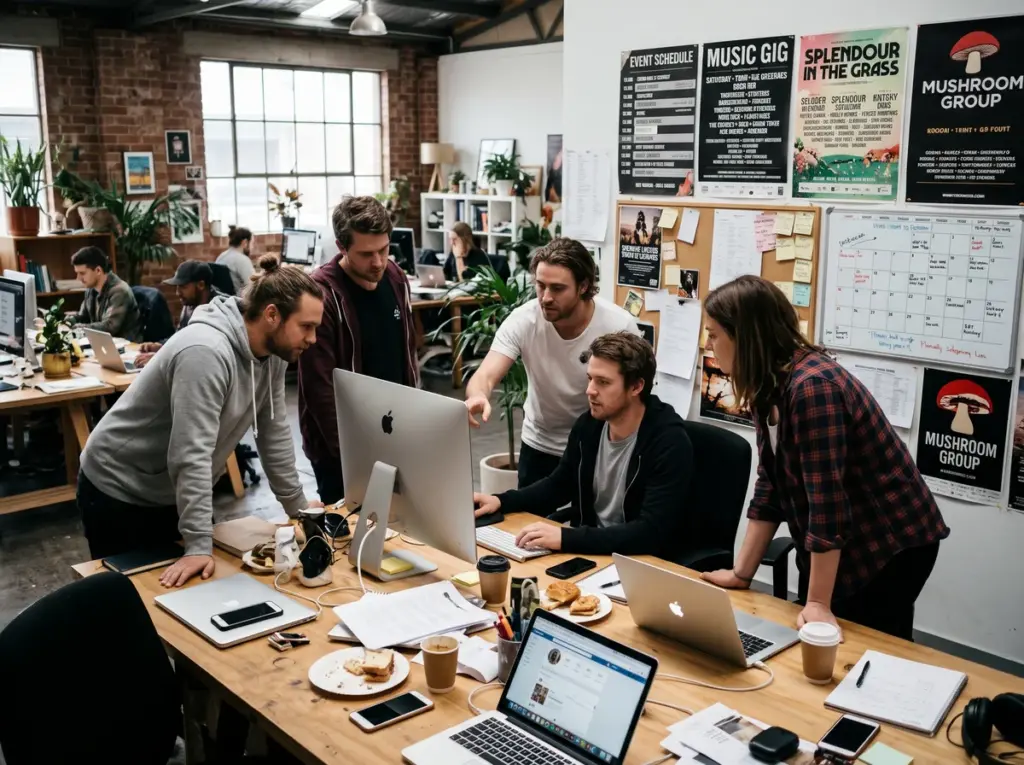
Rewind to 2016, when Instagram limited every account to a single link in bio. That rule made life hard at Bolster. Its clients included brands like Splendour in the Grass and Mushroom Group.
Every lineup or release sent the audience hunting for tickets, songs, and art through that one link. So the team swapped bio links by hand. Linktree’s official founder story calls the job wasted time, since followers often missed the change.
Each swap was a tiny task on its own. Across a whole client roster, it became an endless chore. Rather than wait for Instagram, Alex Zaccaria and his co-founders built one page that put those links a tap away.
The page went live overnight, and nobody knew if outsiders would care. As it turns out, plenty did. By 2019, the idea had spread around the internet, with Jamie Oliver, Red Bull, and Qantas on board.
How a Side Project Grew into a Billion-Dollar Platform
The best part of Linktree’s rise is that users found it on their own long before investors came knocking. This timeline tracks the side hustle’s first eight years, milestone by milestone.
| Year | Milestone | Users | Capital Raised |
| 2018 | Split from Bolster | Not disclosed | None |
| 2019 | Organic growth | 2.7 million | None |
| Oct 2020 | Series A | Not disclosed | US$10.7 million |
| Mar 2021 | Series B | About 12 million | US$45 million |
| Mar 2022 | Series B extension | 24 million | US$110 million (US1.3 billion valuation) |
| May 2024 | User milestone | 50 million | None |
Those 2.7 million people arrived with zero ad spending (roughly 2,000 sign-ups).
Every link-in-bio page carried the Linktree name, so each one doubled as an ad the company never paid for. If your customers share your menus or booking links in public, you’ll have the same built-in advertising.
From there, outside investment finally arrived with a Series A in October 2020. TechCrunch’s report on Linktree’s growth as a creator tool quoted Alex Zaccaria, who said the founders could’ve kept growing sustainably. They chose to “pour some fuel on the fire” instead.
The round’s angel backers included Patreon’s chief technology officer, Sam Yam, and Culture Amp’s Doug English, two leaders who’d scaled tech platforms. Hiring kept pace, too, and headcount rose fivefold to 50 staff that year.
Demand grew even more, with Linktree’s influencer, small business, and music segments up over 300% on average between 2020 and 2021. By early 2022, the user count had doubled in 12 months, with Selena Gomez, TikTok, and Major League Baseball on the platform.
That momentum let Linktree join Australia’s tech unicorns, valued past the US$1 billion mark. Growth at that pace sends a bill eventually, and Linktree’s bill arrived in 2022.
The Tough Calls That Tested Linktree

What happens when startups hire for growth that doesn’t last? For Linktree, the answer came as two rounds of job cuts and one widely mocked staff email. Each landed within 15 months of unicorn status.
Both hold lessons for founders, so we’ll talk through the job losses first, then the note behind the backlash.
Two Rounds of Job Cuts in under a Year
In plain terms, Linktree staffed up in 2021 for a market that cooled sooner than expected. The first cut, in August 2022, hit 17% of the team. Zaccaria told staff his growth assumptions had been wrong.
To soften the blow, the average payout topped 11 weeks’ pay, above legal minimums. A second round in June 2023 cut 27%, roughly 60 people, mostly in Australia and New Zealand. His memo tied the layoffs to hiring in the US, Linktree’s largest market.
The Staff Email That Drew Public Backlash
That memo ran to 1,235 words and buried the layoffs beneath upbeat stats. It also announced the acquisition of rival Bento, which critics on LinkedIn called badly timed.
Awkwardly, the company had earlier won an AFR Best Places to Work title, which made the misstep sting more. Our reporting suggests teams take hard news better when leaders deliver it plainly.
If you ever face the same call, you’ll want the bad part in your first line instead of your fourth paragraph.
Linktree’s San Francisco Base and Push into E-Commerce
Linktree now has offices in Melbourne, Sydney, and San Francisco, where Alex Zaccaria is based. He told Forbes Australia in May 2026 that he’d asked his accountant about shifting more of the company to the US. His concern was the proposed end of the 50% capital gains tax discount (the bill hadn’t passed Parliament when he spoke).
However, the bigger story is how the business earns beyond subscriptions.
- Commerce Links and Payments: Commerce Links let creators connect Shopify, Square, PayPal, and GoFundMe to their page. The free plan supports these links, while seller fees drop to 0% on Premium, versus 9% on Starter. Premium also adds data export, so sellers can track which links earn.
- Storefronts That Pay Commission: A 12 to 15% commission goes to creators who add a storefront with products from over 2,000 brands like Adidas and Lululemon. The company’s own 2024 estimate put users’ sales through their pages at over US$6 billion a year. The model pays without any stock to hold or orders to ship.
- Bookings Arrive via Fingertip: In November 2025, the company bought Melbourne startup Fingertip. Linktree’s team came across the startup, and the deal added booking and payment tools for freelancers and small businesses. Fingertip’s users could join the community and run bookings, sales, and their online presence from one page.
Visa’s creator economy research found 88% of creators globally expect their revenue to grow within a year. Linktree’s bet is that people want to express themselves and earn in one spot. The catch is cost, since a 9% seller fee on lower-tier plans fee eats into thin margins and keeps rivals like Beacons in play.
Who Owns Linktree and Who Leads It Today
The business remains private after three funding rounds that brought in about US$166 million from investors. Yet, Alex Zaccaria still runs it as CEO.
Who founded Linktree may be settled, but who owns it today takes more explaining.
Founders and Venture Backers Share the Equity
Linktree Pty Ltd is a proprietary company, a common business structure in Australia, and doesn’t publish founder stakes. The co-founders own shares alongside firms like:
- Index Ventures
- Coatue
- Insight Partners
- AirTree Ventures
- Greenoaks
Each investment left the founders with a smaller slice. In return, the money paid for the hiring and US push we addressed earlier. If you’re hoping to buy in, you won’t find the stock on the ASX, though some trades are on Forge.
Leadership, however, is a simpler story.
Alex Zaccaria’s Decade as Linktree CEO
Zaccaria has been CEO since March 2016, more than a decade (which, in startup terms, is practically a career). The highs included 2022, when he told staff he “couldn’t be more proud” of the team after the unicorn raise.
He bought rival Koji in December 2023, though Linktree shut down its product and brand the following month. In January 2024, Linktree added a new chief product officer and two AI specialists. Sydney scheduling app Plann followed in August 2024, adding social scheduling tools to Linktree’s offering.
Alex Zaccaria Net Worth Estimates versus the Verified Facts

No one has publicly verified Alex Zaccaria’s net worth, and the undisclosed stakes we covered earlier explain why. If you Google his name, you’ll find confident figures on celebrity-wealth sites that cite no sources.
Our own digging turned up nothing solid behind those numbers. Estimates start with the 2022 valuation, but that figure is over four years old and predates the job cuts. The founders may own shares worth more or less today, and only their accountants would know.
His wealth isn’t tied to one company, either. Online, he describes himself as “backing the next gen of founders” through Side Stage Ventures, where he’s a venture partner.
Side Stage’s early syndicate put investment into startups like Mr Yum, Heaps Normal, and Tixel before launching a venture capital fund. Those holdings stay private as well, so treat any single estimate with caution.
What Australian Founders Can Learn from Alex Zaccaria
Australian founders can take heart, since fixing one small annoyance built a global company from a Melbourne office. That’s quite a result for a one-night build.
Zaccaria’s team also kept Bolster running, so nobody bet their income on an untested idea. And many lasting startups we profile follow this order: fix your own problem, prove demand, then raise.
When you’re ready to move forward, our site has founder articles and guides on how to start a business in Australia. We hope they help you create a tool the next generation of businesses will rely on in the future.
FAQs about Alex Zaccaria
Three questions tend to follow a story like this one, and each gets a quick answer next.
What Does Link in Bio Mean?
Link in bio means a single clickable link on a social profile that opens a page of other links. Creators use it to send followers to music, shops, bookings, and newsletters with one tap. On paid plans, SEO (search engine optimisation) settings can also help that page appear in Google search results.
What Else Has Alex Zaccaria Done as an Entrepreneur?
Alex Zaccaria has taught, judged creator grants, and backed startups through Side Stage, as we covered earlier. His teaching came through General Assembly, where he ran classes while still at Bolster. He also judged the company’s US$250,000 Passion Fund, which aimed to back 25 to 40 creators and small businesses.
Which Tools Compete with Zaccaria’s Platform?
The main rivals include Later, with about 7 million users, and Beacons, with more than 2 million, according to 2024 figures. Bitly, known for shortening links, also launched its own landing-page tool. Two other rivals, Koji and Bento, now belong to Zaccaria’s company after the 2023 deals we mentioned.