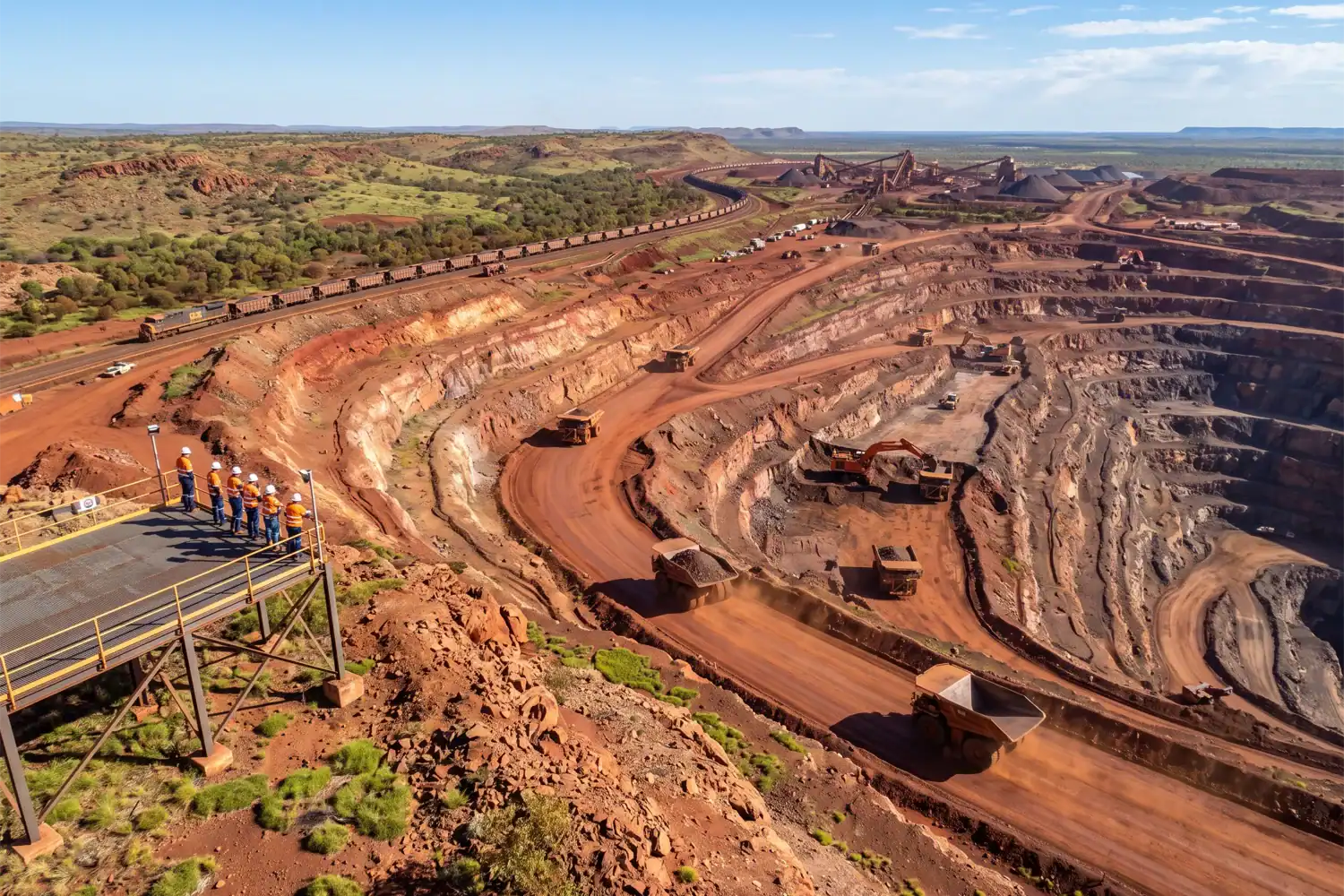
Andrew Forrest built Fortescue Metals Group from a small exploration company into one of the world’s largest iron ore producers. Along the way, he co-founded Australia’s largest philanthropy, bet billions on green energy, and landed in courtrooms on three continents.
At Australian Business Magazine, we’ve spent years covering the people behind Australia’s biggest business stories. Forrest’s story remains one of the most compelling we’ve followed.
In this article, we’ll cover the moments that influenced Andrew Forrest’s career, including the rise of Fortescue, his net worth, and his work through the Minderoo Foundation. We’ll then examine his biggest legal challenges and compare his success with that of Gina Rinehart.
Ready? Let’s begin.
Who Is Andrew Forrest?
Andrew Forrest is an Australian billionaire, mining executive, and philanthropist born in Perth, Western Australia. He’s the founder and executive chairman of Fortescue Ltd (formerly Fortescue Metals Group). It’s one of the world’s largest iron ore producers. He also co-founded the Minderoo Foundation with his former wife, Nicola Forrest.
Here’s a quick snapshot of the man behind the mining empire:
- Born in Perth: John Andrew Henry Forrest was born on 18 November 1961 in Perth. He’s the youngest of three children, and his great-great-uncle, John Forrest, served as the first Premier of Western Australia.
- Pilbara Family Roots: Mr Forrest’s family managed Minderoo Station in the Pilbara for over a century. That cattle station shaped a lot of who Forrest is today, and he bought it back in 2009 after his father sold it decades earlier.
- Hale School and UWA: After attending Christ Church Grammar School, Forrest moved to Hale School in Perth. He then studied economics and politics at the University of Western Australia.
- The Twiggy Nickname: Most Australians know him as Twiggy. The nickname dates back to his younger years, when he was known for his slim frame.
- Childhood Speech Impediment: As a child, Forrest had a significant stutter that affected his ability to communicate. Over time, he worked to overcome the condition and became one of Australia’s most recognisable business leaders.
These formative years gave him a strong connection to regional Australia, a theme that has remained constant throughout his career.
How Did Andrew Forrest Start His Career?
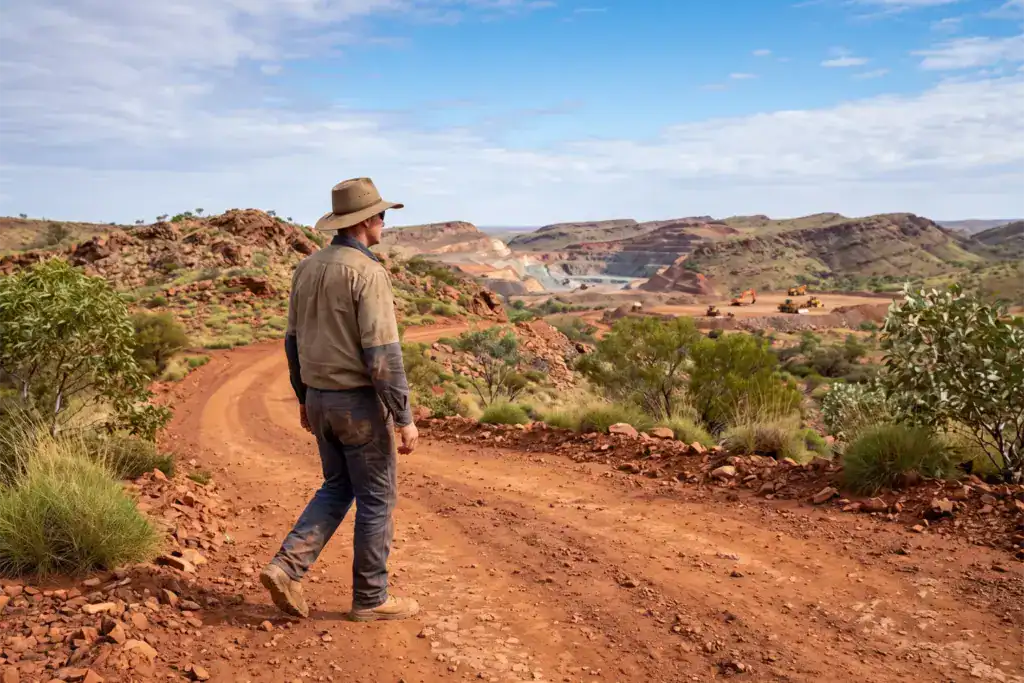
The Fortescue founder started his career as a stockbroker before founding two mining companies in Western Australia. His path wasn’t a straight line to success, though. It included a very public failure that would’ve ended most people’s careers.
We’ll now explain how Forrest went from a Perth stockbroker to one of the world’s leading miners.
Early Days as a Stockbroker
Forrest spent his early career buying and selling shares before iron ore made him a billionaire. He worked at two Perth brokerage houses, Kirke Securities and Jacksons, right after graduating from the University of Western Australia (UWA).
During that time, he noticed that global demand for stainless steel was climbing at around 4% per year. That observation stuck with him, and it eventually pulled him out of stockbroking and into the mining industry (the trend offered a glimpse of where industrial demand was heading).
The Perth businessman had decided to strike out on his own by his early thirties. He left the brokerage world behind and founded Anaconda Nickel.
Anaconda Nickel and Its Collapse
Anaconda Nickel was the Australian entrepreneur‘s first mining venture, and it nearly destroyed his career. Mr Forrest founded the company in the mid-1990s to mine nickel and cobalt at Murrin Murrin in Western Australia.
Although he secured more than $1 billion in financing for the project, it soon faced major challenges. Cost blowouts, operational problems, and a heavy debt burden placed the company under increasing financial pressure.
By 2001, the entrepreneur was ousted as CEO. Glencore stepped in, took full control, and renamed the company Minara Resources. It was a painful chapter for Andrew Forrest, but it didn’t stop him from coming back stronger.
Leadership Takeaway: Forrest often describes setbacks as learning opportunities. The Anaconda experience became the most expensive lesson of his career.
The Founding of Fortescue Metals Group
This company gave the businessman a second chance at mining and made him one of Australia’s richest people. In April 2003, Dr Forrest founded Fortescue after taking control of a small business called Allied Mining and Processing and renaming it Fortescue Metals Group.
The mining magnate then developed Cloudbreak in the Pilbara. At the same time, Fortescue built a processing plant, a heavy-haul railway, and port facilities at Herb Elliott Port. The project was completed in roughly two years, an exceptionally fast timeframe for a mining development of that scale.
Fortescue’s first iron ore shipment to China left in May 2008. The company grew rapidly into one of the world’s largest iron ore producers from that point on.
What Is Andrew Forrest’s Net Worth?
Andrew Forrest’s net worth sits at roughly US$29.6 billion according to Bloomberg’s June 2026 estimate. Forbes puts it lower at around US$16.6 billion. That gap comes down to how each outlet values its Fortescue stake and private holdings.
The table below breaks down the numbers behind his wealth:
| Category | Detail |
| Net Worth (Bloomberg, June 2026) | ~US$29.6 billion |
| Net Worth (Forbes, 2025 estimate) | ~US$16.6 billion |
| Fortescue Stake | ~36.7% (held through Tattarang, Minderoo, family) |
| Fortescue Revenue (FY2025) | US$15.5 billion |
| Iron Ore Shipped (FY2025) | 198+ million tonnes |
| Australian Financial Review Ranking | Formerly ranked the richest Australian (2008) |
| Private Company | Tattarang (agri food, energy, mining, property) |
The bulk of Forrest’s fortune comes from that 36.7% stake in Fortescue. The company shipped over 198 million tonnes of iron ore in the year to June 2025 and pulled in US$15.5 billion in revenue.
The Australian Financial Review (AFR) named the WA businessman the richest person in Australia back in 2008. His ranking has moved around since then, depending on Fortescue’s share price and iron ore demand from China.
Outside of Fortescue, Forrest runs Tattarang, which is his private investment company. It covers a wide range of industries, including agri-food, renewable energy, property, and mining.
Tattarang also owns Harvest Road. It’s one of Western Australia’s biggest beef and dairy operations.
How Is Dr Andrew Forrest Driving Green Energy?
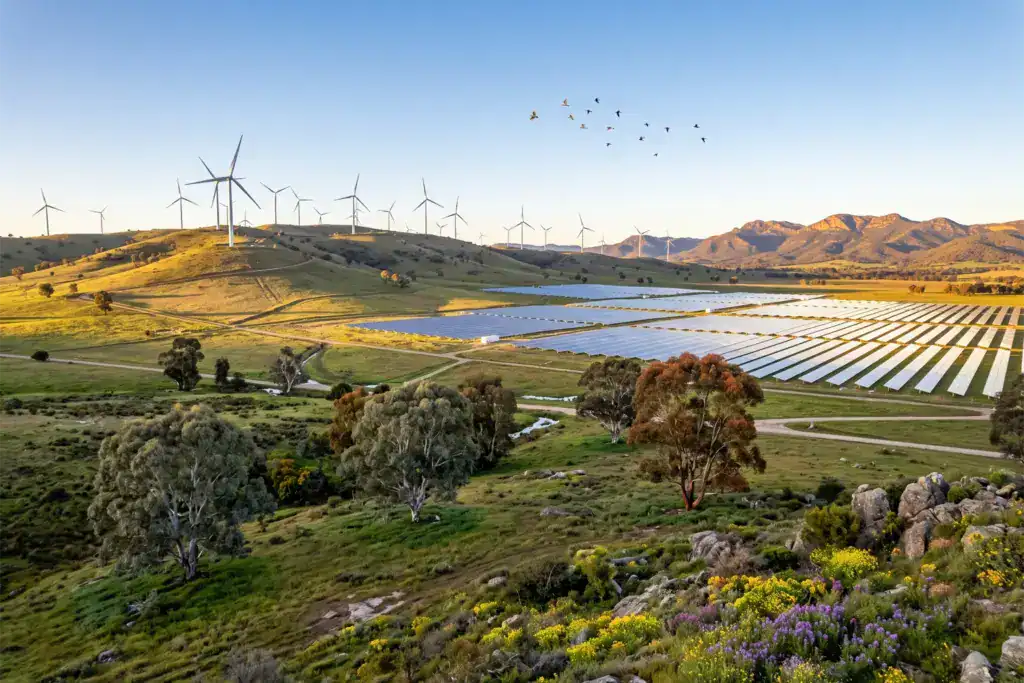
Andrew Forrest is driving green energy by investing billions into hydrogen, renewables, and electric mining technology through Fortescue. It’s an unusual move for someone who built his fortune digging up iron ore. But Forrest has been vocal about ending fossil fuel use across heavy industry.
Let’s take a closer look at the three areas that represent a different piece of that green energy push.
Fortescue Future Industries and Hydrogen
Fortescue launched Fortescue Future Industries (FFI) in 2020 with a bold pitch. The goal was to produce green hydrogen at a scale large enough to compete with oil and gas companies. Forrest initially set a target of 15 million tonnes per year by 2030.
Unfortunately, that target got paused in mid-2024. High production costs, slow technology adoption, and weak demand from industrial buyers all played a part in that decision.
The company also scrapped its flagship Gladstone hydrogen plant and cut 700 jobs across the business (the move showed that scale alone doesn’t guarantee success).
Still, the company hasn’t abandoned hydrogen entirely. It signed an agreement with Germany’s E.ON to supply green energy to Europe, and projects in Norway and Brazil are still in the pipeline.
The Real Zero 2030 Target
Fortescue plans to eliminate fossil fuels from its Australian operations by 2030. The company calls the initiative Real Zero. Under this strategy, the mining giant aims to achieve net-zero emissions without carbon offsets or carbon credits.
The strategy relies on renewable energy and zero-emissions technologies instead of diesel and gas.
At Christmas Creek mine in the Pilbara, the group commissioned Australia’s largest hydrogen plant. It now powers a fleet of hydrogen fuel cell coaches onsite. The company is also trialling electric excavators and 240-tonne electric haul trucks across its mine sites.
If Fortescue pulls off this plan, it’ll be one of the first major miners in the world to run entirely on renewable energy.
Squadron Energy and Renewable Projects
Outside Fortescue, Forrest backs renewable energy through Tattarang. In December 2022, Tattarang-owned Squadron Energy completed its acquisition of CWP Renewables in a deal valued at about A$4 billion. It made Squadron Australia’s largest renewable energy investor, operator, and developer.
The company’s portfolio now sits at 2.4 GW of operating capacity, with a 20 GW development pipeline spanning wind, solar, and battery storage projects. The expansion shows that Dr Forrest’s renewable energy and sustainable foreign investment ambitions extend well beyond Fortescue’s operations.
Strategic Takeaway: Control of renewable energy assets could provide a strategic advantage if demand for green hydrogen grows as expected.
What Is the Minderoo Foundation?
The Minderoo Foundation is a Perth-based philanthropic organisation that Andrew and Nicola Forrest co-founded in 2001. Minderoo manages assets worth more than A$9 billion and is widely regarded as Australia’s largest philanthropic foundation.
In 2013, Forrest became the first Australian to sign the Giving Pledge and committed to donate the majority of his wealth.
The foundation focuses on six main areas:
- Modern Slavery and Walk Free: The Walk Free initiative publishes the Global Slavery Index, a globally recognised report that tracks modern slavery across 160 countries. It has helped shape legislation in Australia, the UK, and beyond.
- Indigenous Employment: Fortescue’s Vocational Training and Employment Centres have placed thousands of Indigenous Australians into full-time jobs. Mr Forrest was also appointed by the Australian Government in 2013 to chair a national review into Indigenous training and employment programs.
- Ocean Health: Dr Forrest holds a PhD in marine ecology from the University of Western Australia. Through Minderoo, he funds research into overfishing, plastic pollution, and ocean science across multiple continents.
- Early Childhood Development: Thrive by Five is the foundation’s campaign for universal early childhood education in Australia. The campaign pushes for government investment in the first five years of a child’s life, when brain development is at its peak.
- Cancer Research: The Eliminate Cancer Initiative brings together researchers from Australia, Europe, and the US. It funds world-leading research into rare and less-survivable cancers that typically receive less attention and fewer dollars.
- Humanitarian Relief: Minderoo has deployed rapid response teams and funding for bushfire recovery, COVID-19 support, and humanitarian aid in Ukraine. Forrest personally donated $70 million during the 2019-2020 Australian bushfire crisis.
As you can see, Minderoo has grown into a global philanthropic organisation. With over 300 initiatives funded across the globe, it’s become one of the most active private foundations in the world.
How Does Andrew Forrest Compare to Gina Rinehart?
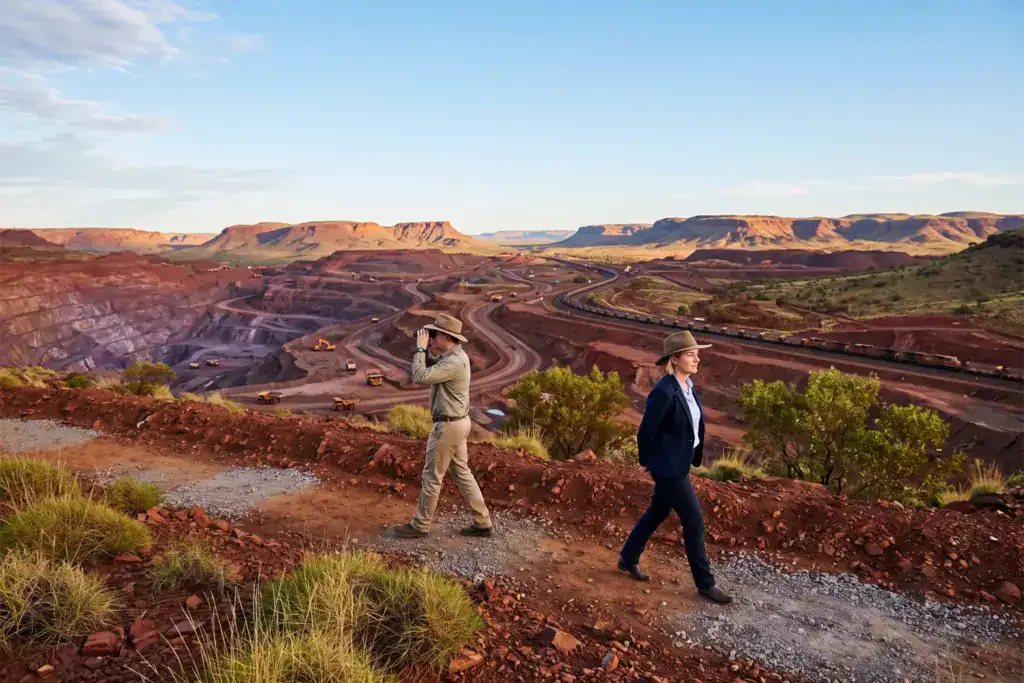
Andrew Forrest and Gina Rinehart are two of Australia’s most prominent mining billionaires. Both built their wealth in the Pilbara and have regularly appeared near the top of the Australian Financial Review Rich List.
However, their views on climate, politics, and philanthropy often place them on opposite sides of the debate.
We’ll now get into more detail about these differences.
Wealth and Business Rivalry
Two of Australia’s richest people made their fortunes from the same red dirt, yet they couldn’t be more different. Gina Rinehart inherited her wealth through Hancock Prospecting, a company her father, Lang Hancock, founded. But Forrest built Fortescue from scratch with no family mining fortune behind him.
On the Australian Financial Review Rich List, these two businesspeople regularly swap positions. Rinehart has topped it more often in recent years, with her wealth reportedly sitting above $30 billion. Forrest usually trails close behind, though his ranking shifts with Fortescue’s share price.
Their business empires also overlap, since both of them operate massive iron ore mines in the Pilbara and rely heavily on Chinese demand. But Forrest has diversified into green energy and philanthropy in a way that Rinehart hasn’t.
Wealth Perspective: Rich List rankings often attract headlines, but both billionaires derive most of their wealth from ownership stakes rather than cash holdings.
Opposing Positions on Climate Action
Dr Andrew Forrest AO pushes hard to end fossil fuel use while Rinehart remains publicly sceptical about climate policy. In fact, he has spent billions on green hydrogen, electric mining, and renewable energy. He regularly appears at global forums calling for the end of fossil fuels.
But Rinehart has funded climate sceptic think tanks and lobbied against emissions reduction targets.
That split plays out across the broader Australian mining industry, too. Younger companies like Fortescue are chasing decarbonisation targets, while established players tied to coal and gas are pushing back. Forrest and Rinehart have become the public faces of that divide.
What Legal Battles Has Andrew Forrest Faced?
Andrew Forrest has faced legal battles involving corporate regulators, Indigenous land rights, and international tech companies. Some of these cases dragged on for years, while some others are still playing out in courtrooms right now.
The most prominent of these legal battles involves Meta and the spread of fraudulent cryptocurrency advertisements.
The Meta Crypto Scam Lawsuit
Forrest first discovered fake cryptocurrency ads using his face on Facebook back in 2014. By 2019, he’d written an open letter to Mark Zuckerberg asking Meta to remove them, though it didn’t work.
In September 2021, Forrest filed a civil lawsuit against Meta in a California federal court. He also pursued criminal charges against Meta Australia in early 2022, but Australian prosecutors dropped that case in April 2024 due to insufficient evidence.
The US civil case is still going. In April 2026, Forrest’s legal team accused Meta of destroying close to 30,000 pieces of evidence after being put on notice to preserve them. That allegation could strip Meta of its main legal defence under Section 230 of the US Communications Decency Act.
Aboriginal Land Rights Cases Involving Indigenous Australians
Fortescue has faced long-running compensation claims from the Yindjibarndi people over Pilbara mining operations. The Yindjibarndi were granted exclusive native title over the area covering Fortescue’s Solomon Mine Hub in 2017.
In May 2025, the Federal Court ordered Fortescue to pay approximately A$150 million in compensation to the Yindjibarndi people over mining activities on native title land.
The compensation claim focused on Fortescue’s Solomon Hub, which is located largely on Yindjibarndi country. The court heard that mining operations had damaged or destroyed nearly 250 cultural sites across the area (the ruling added to a growing body of native title case law).
Fortescue has acknowledged the ruling but hasn’t indicated whether it plans to appeal. The judgment is important because it represents one of the largest native title compensation awards in Australian history.
ASIC Proceedings and Court Rulings
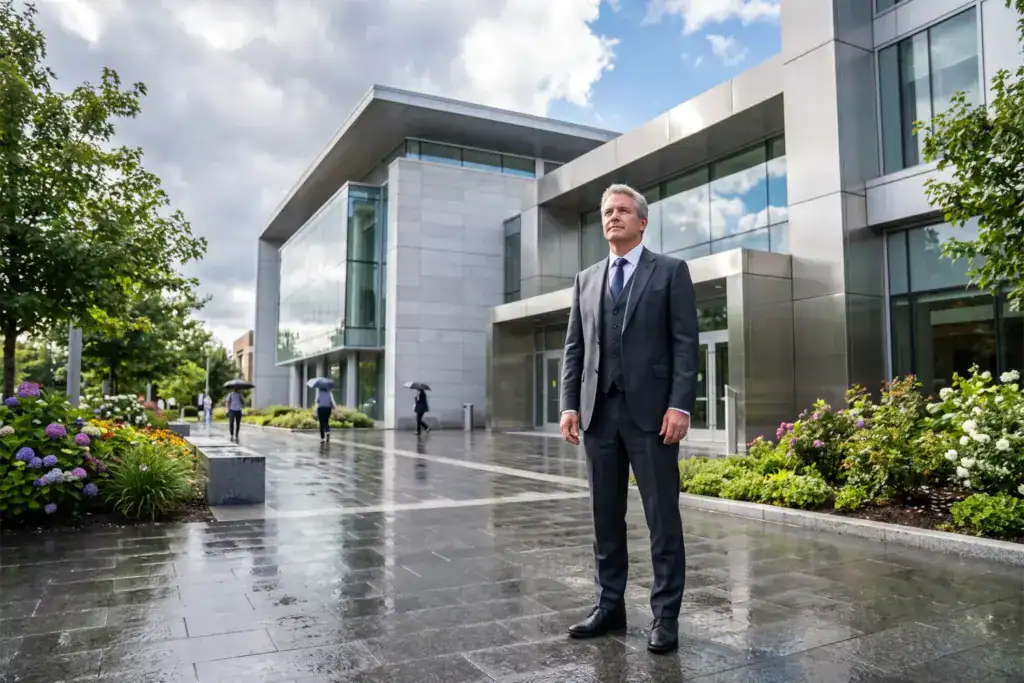
The High Court ruling in Forrest’s favour became a landmark case for the interpretation of Australian Securities Exchange (ASX) announcements.
The dispute began in 2004, when the Australian Securities & Investments Commission (ASIC) launched proceedings against Fortescue. The regulator alleged that the company had misled investors about “binding agreements” with three Chinese state-owned companies to develop Pilbara infrastructure.
ASIC argued that Fortescue’s ASX announcements gave investors the impression that the agreements were legally enforceable. The case moved through several courts over eight years, and the Full Federal Court initially ruled against Forrest.
But in October 2012, the High Court unanimously overturned that decision. All five justices found that Fortescue and Forrest had not breached the Corporations Act. The judgment became an important precedent for how Australian courts interpret market disclosures and alleged misleading statements.
Case Study: The dispute remains one of the most prominent examples of a regulator and a major listed company clashing over disclosure standards.
What Can Australian Business Owners Take From Andrew Forrest?
Andrew Forrest went from a stockbroker in Perth to building one of the world’s largest iron ore companies. He failed publicly with Anaconda Nickel, came back stronger with Fortescue, and then bet billions on green energy. That kind of persistence is rare to find.
But it’s not just the mining story that defines him. Forrest signed the Giving Pledge, built Australia’s largest philanthropy, and took on Meta in a US federal court.
If you’re running a business in Australia, there’s a lot to take from that mindset. You need to start with what you’ve got, stay stubborn when things fall apart, and think beyond profit.
We cover stories like Forrest’s regularly at Australian Business Magazine. Browse our stories for more inspiration from the people who are influencing Australian businesses every day.
Frequently Asked Questions (FAQs)
Andrew Forrest’s career spans far more than mining, which is why people often have questions about his broader interests, leadership approach, and influence beyond Fortescue. Below, we’ll answer some of the most commonly asked questions that weren’t covered in the main article.
Why Do Universities Study Andrew Forrest’s Business Career?
Researchers at the Australian National University often examine how Forrest built a successful company and became one of Australia’s most influential people in business.
Has Forrest Worked With International Organisations?
Forrest has supported initiatives connected to the United Nations and the foreign relations global board, particularly those focused on addressing global challenges.
What Industries Interest Andrew Forrest Beyond Resources?
Dr Forrest invests across a diverse range of sectors, including medical technology, agriculture, property, and other industries with long-term growth potential.
Why Does Mr Forrest Support New Energy Technologies?
He sees battery metals and accelerating green energy as important tools in responding to climate change and improving industrial sustainability.
What Does Andrew Forrest Mean by National Resilience?
Forrest often links national resilience to investment in sectors critical to economic stability, including energy systems, logistics networks, and infrastructure operators.
How Does Andrew Forrest Approach Problem Solving?
He frequently supports science-driven solutions and advocacy programs that fund world-leading research into complex social and environmental issues.
Why Did Dr Forrest Establish Minderoo Foundation?
He helped establish Minderoo Foundation as a vehicle for large-scale philanthropy. It has since grown into what is now Australia’s largest philanthropy by assets.
What Governance Principles Does Andrew Forrest Support?
As a board member and former director of various organisations, Forrest has publicly supported safe governance and accountability in leadership.
What Legacy Does Forrest Hope to Leave?
Many supporters view Forrest as a business leader committed to long-term prosperity, distinguished service, and creating value beyond shareholder returns.
What Other Australian Industries Have Attracted Forrest’s Attention?
Beyond mining, Forrest has shown interest in iconic Australian brands, high-performance shipbuilding, and businesses tackling pressing challenges facing modern economies.